
Evidence-Informed

The science
behind the method

Every pillar of the Vortex Vitality Method™ is grounded in research. Not to impress — but because understanding why something works makes it far easier to commit to.

Built on evidence.
Delivered with warmth.

The Vortex Vitality Method™ draws from exercise physiology, sleep science, nutritional biochemistry, environmental medicine and neuroscience. The goal is never to overwhelm — it's to give people the minimum viable understanding that drives maximum change.

Vicky translates complex research into practical tools. The science is in the background, doing its work. The experience in the room is energising, not academic.

60%
of the human body is water — the foundation of every biological process
20+
years of personal research and lived embodiment behind the method
4
interconnected pillars — body, nutrition, environment, mindset
Movement and body
01

Body

Movement & Recovery

Movement is medicine — but only when it builds capacity rather than depleting it further.

Exercise physiology confirms what many high-performers discover too late: chronic overtraining suppresses immune function, elevates cortisol and accelerates cellular ageing. The body thrives on intelligent movement — varied, restorative, and calibrated to the nervous system's current state.

Rebounding stimulates the lymphatic system, which has no pump of its own. Yoga and Pilates rebuild structural integrity and body awareness. Strength training maintains muscle mass critical for metabolic health and longevity. Sleep is where cellular repair, memory consolidation and hormone regulation happen — it is not optional recovery. It is the work itself.

  • Lymphatic flow supports immune defence and cellular detoxification
  • Muscle mass is the primary predictor of metabolic health after 40
  • Deep sleep triggers growth hormone release and tissue repair
  • Parasympathetic activation through yoga reduces chronic inflammation
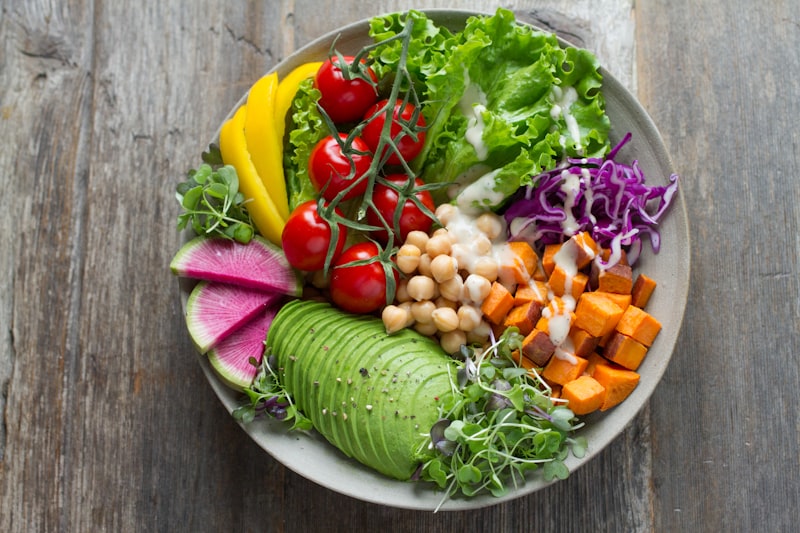
Whole foods and nutrition

Food is information. Every meal is a signal to your cells — and most people are sending the wrong message.

Nutritional biochemistry has moved far beyond calories in, calories out. The quality and diversity of food directly influences the microbiome, which regulates mood, immunity, inflammation and cognitive clarity. Ultra-processed foods disrupt this ecosystem rapidly.

Whole foods, fermented foods and sprouted foods introduce enzymes, probiotics and bioavailable micronutrients that support the gut-brain axis. Structured fasting gives the digestive system rest and activates autophagy — the cellular self-cleaning process strongly associated with longevity research.

  • The gut microbiome produces 90% of the body's serotonin
  • Fermented foods increase microbial diversity within weeks
  • Fasting activates autophagy — the Nobel Prize-winning longevity mechanism
  • Sprouted foods increase bioavailability of key nutrients by up to 50%
02

Nutrition

Food as Signal

Environment and morning light
03

Environment

Light, Air & Temperature

The body doesn't exist in isolation from its environment. Light, temperature and air quality are biological inputs — not lifestyle preferences.

Circadian biology research has established morning light exposure as the master regulator of sleep, cortisol, metabolism and mood. Artificial light after dark disrupts melatonin production and impairs the restorative sleep cycles the body depends on.

Thermal stress — sauna and cold therapy — activates heat shock proteins, improves cardiovascular function and triggers the release of brain-derived neurotrophic factor (BDNF), supporting neuroplasticity and mood regulation. Clean air, both indoors and outdoors, reduces the toxic load the body must process and directly affects cognitive performance.

  • Morning sunlight within 30 minutes of waking sets the circadian clock
  • Sauna use 4x per week is associated with significantly reduced cardiovascular risk
  • Cold exposure raises norepinephrine by up to 300%, improving focus and mood
  • Indoor air is typically 2–5x more polluted than outdoor air
Mindset and breathwork

The nervous system does not distinguish between a physical threat and a deadline. Chronic stress is chronic inflammation — and isolation makes it worse.

Psychoneuroimmunology — the science of how thoughts and emotions affect physical health — has established clear mechanisms linking chronic psychological stress to suppressed immunity, accelerated cellular ageing and increased disease risk. Stress is not a character flaw. It is a physiological state that requires physiological tools.

Breathwork directly modulates the autonomic nervous system, shifting the body from sympathetic to parasympathetic dominance within minutes. Healthy boundaries lower chronic threat-activation in the nervous system. Purpose and meaning activate different neurochemical pathways — ones associated with resilience, creativity and sustained engagement rather than survival mode.

Community and relationships are not a luxury. Research consistently identifies strong social connection as one of the most powerful predictors of longevity, immune resilience, and cognitive health. The quality of our relationships shapes the biology of our stress response — and our capacity to recover from it.

  • Chronic stress shortens telomeres — a direct marker of biological ageing
  • Box breathing activates the vagus nerve and lowers cortisol measurably
  • A sense of purpose is independently associated with reduced mortality risk
  • The relaxation response can be trained — it is a learnable physiological skill
  • Strong social connection and community are among the most powerful predictors of longevity and immune resilience
  • High-quality relationships reduce cortisol, inflammation, and the risk of cognitive decline
  • Healthy boundaries lower chronic threat-activation in the nervous system, reducing baseline stress load
04

Mindset

Nervous System & Purpose

Why hydration
is the source of life

Water is not a health trend. It is the medium in which every biochemical reaction in the body takes place. Structured, mineralised hydration is foundational — not supplementary.

75%
of people are chronically mildly dehydrated — affecting energy, focus and mood daily
2%
drop in hydration causes measurable cognitive impairment and reduced physical performance
37°C
body temperature — maintained within fractions of a degree by water's thermal regulation
enzymatic reactions, nutrient transport and cellular communication all require water as the medium

Built for the
long game

Every element of the Vortex Vitality Method™ aligns with the current frontiers of longevity science — the research into how humans can not just live longer, but live better for longer.

From autophagy and telomere health to mitochondrial function and the gut-brain axis, the method addresses the biological levers that determine how we age — and how we feel right now.

Longevity and vitality

Autophagy

Cellular self-cleaning activated by fasting and exercise. The Nobel Prize-winning mechanism of longevity.

Telomere Health

Reduced by chronic stress. Protected by sleep, movement and anti-inflammatory nutrition.

Mitochondria

The cellular energy factories. Optimised by cold exposure, fasting and aerobic exercise.

Gut-Brain Axis

The microbiome directly regulates mood, immunity and cognition via the vagus nerve.

Science that you
can feel

The research is compelling. But the real evidence is in how you feel when you apply the method. Vicky's talks translate this science into immediate, practical tools — no PhD required.

Bring the Science to Your Team

Sources & Further Reading

The Vortex Vitality Method™ draws from peer-reviewed research across exercise physiology, nutritional science, environmental medicine and neuroscience. Selected key references below.

Body · Movement & Sleep

  1. Pedersen, B.K. & Saltin, B. (2015). Exercise as medicine — evidence for prescribing exercise as therapy in 26 different chronic diseases. Scandinavian Journal of Medicine & Science in Sports, 25(S3), 1–72.
  2. Walker, M. (2017). Why We Sleep: Unlocking the Power of Sleep and Dreams. Scribner. [Synthesises research on sleep, HGH release and cellular repair.]
  3. Cryan, J.F. et al. (2019). The Microbiota-Gut-Brain Axis. Physiological Reviews, 99(4), 1877–2013.
  4. Calder, P.C. (2017). Omega-3 fatty acids and inflammatory processes: from molecules to man. Biochemical Society Transactions, 45(5), 1105–1115.
  5. Schoenfeld, B.J. & Grgic, J. (2019). Does Training to Failure Maximise Muscle Hypertrophy? Strength & Conditioning Journal, 41(5), 108–113.

Nutrition · Food as Signal

  1. Sonnenburg, J.L. & Bäckhed, F. (2016). Diet–microbiota interactions as moderators of human metabolism. Nature, 535, 56–64.
  2. Levine, B. & Kroemer, G. (2008). Autophagy in the Pathogenesis of Disease. Cell, 132(1), 27–42. [Nobel Prize-cited autophagy mechanism.]
  3. de Cabo, R. & Mattson, M.P. (2019). Effects of Intermittent Fasting on Health, Aging, and Disease. New England Journal of Medicine, 381, 2541–2551.
  4. Zmora, N. et al. (2019). You Are What You Eat: Diet, Health and the Gut Microbiota. Nature Reviews Gastroenterology & Hepatology, 16, 35–56.
  5. Martínez Steele, E. et al. (2016). Ultra-processed foods and added sugars in the US diet. BMJ Open, 6(3).

Environment · Light, Heat & Cold

  1. Leproult, R. & Van Cauter, E. (2011). Effect of 1 Week of Sleep Restriction on Testosterone Levels in Young Healthy Men. JAMA, 305(21), 2173–2174.
  2. Laukkanen, T. et al. (2018). Sauna bathing is inversely associated with dementia and Alzheimer's disease. Age and Ageing, 46(2), 245–249.
  3. Shevchuk, N.A. (2008). Adapted cold shower as a potential treatment for depression. Medical Hypotheses, 70(5), 995–1001.
  4. Wright, K.P. et al. (2013). Entrainment of the Human Circadian Clock to the Natural Light-Dark Cycle. Current Biology, 23(16), 1554–1558.
  5. Laukkanen, J.A. et al. (2018). Cardiovascular and Other Health Benefits of Sauna Bathing: A Review of the Evidence. Mayo Clinic Proceedings, 93(8), 1111–1121.

Mindset · Stress & Nervous System

  1. Epel, E.S. et al. (2004). Accelerated telomere shortening in response to life stress. Proceedings of the National Academy of Sciences, 101(49), 17312–17315.
  2. Ma, X. et al. (2017). The Effect of Diaphragmatic Breathing on Attention, Negative Affect and Stress in Healthy Adults. Frontiers in Psychology, 8, 874.
  3. Rozanski, A. (2014). Life Purpose and its Relationship to All-Cause Mortality. Psychosomatic Medicine, 81(6), 517–523.
  4. Benson, H. & Klipper, M.Z. (1975). The Relaxation Response. William Morrow. [Foundational text on trainable parasympathetic activation.]
  5. Slavich, G.M. & Irwin, M.R. (2014). From Stress to Inflammation and Major Depressive Disorder. Psychological Bulletin, 140(3), 774–815.

Hydration · The Core

  1. Popkin, B.M., D'Anci, K.E. & Rosenberg, I.H. (2010). Water, Hydration and Health. Nutrition Reviews, 68(8), 439–458.
  2. Adan, A. (2012). Cognitive Performance and Dehydration. Journal of the American College of Nutrition, 31(2), 71–78.
  3. Riebl, S.K. & Davy, B.M. (2013). The Hydration Equation: Update on Water Balance and Cognitive Performance. ACSM's Health & Fitness Journal, 17(6), 21–28.
  4. Stookey, J.D. et al. (2011). Drinking Water Is Associated With Weight Loss in Overweight Dieting Women Independent of Diet and Activity. Obesity, 16(11), 2481–2488.

Longevity Science

  1. Ohsumi, Y. (2016). Autophagy: An Intracellular Recycling System. Nobel Lecture. Nobel Prize in Physiology or Medicine.
  2. Blackburn, E.H., Epel, E.S. & Lin, J. (2015). Human telomere biology: A contributory and interactive factor in aging, disease risks, and protection. Science, 350(6265), 1193–1198.
  3. Hood, D.A. et al. (2019). Maintenance of Skeletal Muscle Mitochondria in Health, Exercise, and Aging. Annual Review of Physiology, 81, 19–41.
  4. Sonnenburg, J. & Sonnenburg, E. (2019). Vulnerability of the industrialized microbiota. Science, 366(6464).

References are provided for informational purposes. The Vortex Vitality Method™ is an evidence-informed wellness framework, not a medical treatment. Always consult a qualified healthcare professional for personal health decisions.